
Technical integration
Data, systems, permissions, monitoring, and support need to work together.
AI implementation
A successful trial still needs work before production. The next step covers integration, ownership, adoption, governance, and continued measurement.
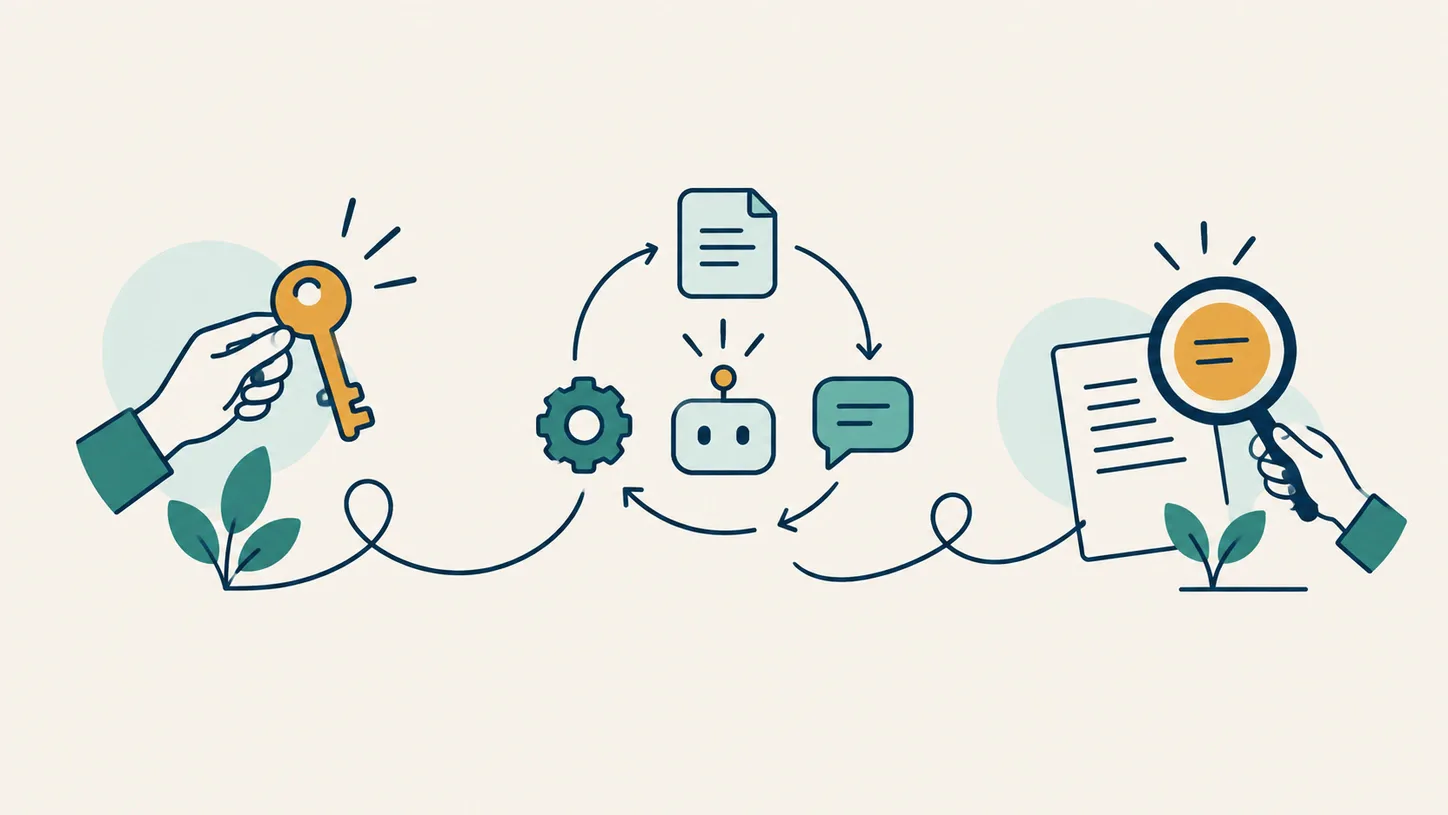
From experiment to everyday operations
Keep what you learned
What worked? Who benefited? Which exceptions arose? What needed more support than expected?
Use those lessons to build a realistic operating plan and decide where a wider rollout makes sense.
Five areas
Assess these areas together and adapt them to the solution's actual use, consequences, and maturity.
Data, systems, permissions, monitoring, and support need to work together.
Make responsibility for business value, operating rules, dependencies, and changes clear.
Employees need to know when to use the solution and when human judgment is required.
Adapt risk management, data protection, documentation, and controls to the specific use case.
Continue the pilot's measurements to see whether value holds up and new problems emerge.
The operating model
The model makes responsibilities and dependencies visible, keeping operational readiness broader than a technical handoff.
Selective scaling
Scaling may mean more users, more workflows, new data sources, or a more robust technical solution.
Give each step a purpose, an owner, and a decision point. Some solutions should stay small. Others need adjustment, and some should stop. That is responsible prioritization.
When more users or workflows can gain demonstrated value.
When operations, data, or controls need to become more reliable.
When cost, risk, or actual use does not justify the next step.
The foundation
If you still need a clear hypothesis, baseline, and decision framework, a focused pilot may be the right first step.
Explore AI pilotsConnect skills, employee involvement, and motivating goals with everyday work.
Explore AI culture in practiceNext steps
Send a brief inquiry. We will get in touch to arrange a no-obligation conversation about your situation and the next practical step.
Discuss your path to productionUse one short operating record to connect the pilot evidence to the next decision. Name a person for each responsibility, attach the relevant evidence, and agree what must be true before more users join. The acceptance criteria depend on the workflow and its consequences; there is no universal accuracy or savings target.
| Decision area | Evidence to record | Responsible owner |
|---|---|---|
| Value and quality | Baseline, pilot result, sample, errors, human review effort, and the agreed acceptance threshold. | The business owner accepts the outcome. |
| Workflow and users | The next user group, tasks, exceptions, training, and when a person must review the output. | The process owner confirms the operating procedure. |
| Data and access | Approved sources, access boundaries, source maintenance, and a check of difficult or sensitive cases. | The named data and system owners approve their boundaries. |
| Support and change | A support contact, incident route, change log, and who can approve updates. | The operating owner accepts ongoing responsibility. |
| Measurement and cost | Measures for use, quality and value; ongoing costs; the review date; and where evidence is kept. | The business owner schedules the next decision. |
| Stop and rollback | Triggers for pausing, the previous working process, and a checked way to restore it. | A named person has authority to pause the rollout. |
Before adding another team, check that its questions and permissions are represented in the evaluation. Agree who maintains the sources, how users report an incorrect answer, and which cases must go to a person. Compare the next group's results with the pilot baseline at the agreed review date. Pause if the agreed quality or risk limits are breached, and retain the previous way of finding the information. This is an illustrative planning example, not a reported customer result.
Choose to expand, adjust, keep the scope small, or stop. Record the reason and the next owner rather than treating a successful demo as automatic permission to scale.
Check whether the pilot supports a production decision · Plan the next rollout step
We help shape the operating plan around your situation. Technical implementation, support arrangements, responsibilities, and any specialist assessments are agreed in the proposal.
Practical checklist reviewed November 10, 2026