
Model 3.0 · September 17, 2026
Prioritize the greatest value for the effort
Model 3.0 gives management a shared basis for assessing AI, IT, and workflow changes. Start with the problem and a realistic no-project alternative. Estimate both the benefit and all the effort needed to achieve it.
| Value: what improves? | Size: what does it take? |
|---|---|
| Measure direct and indirect improvements using 12 fixed criteria. Convert raw benefits to value points (VP). | Include internal hours, external purchases, preparation, change management, training, communication, and follow-up. |
| Use the same reference improvements and 90-day benefit window for all projects. Show uncertainty through scenarios. | Show the base estimate, named risks, and residual reserve separately. 1 SE equals 37.5 hours, or approximately $3,400 in reference resources at 2026 prices. |
Priority = expected value / remaining size
A project with 19.5 VP and 11.47 SE has 1.70 VP/SE. A new project may change the ranking, but not this project's points. The figures remain stable within the same calibration; they are neither universal values nor financial ROI. Also consider total benefit, deadlines, capacity, requirements, and dependencies.
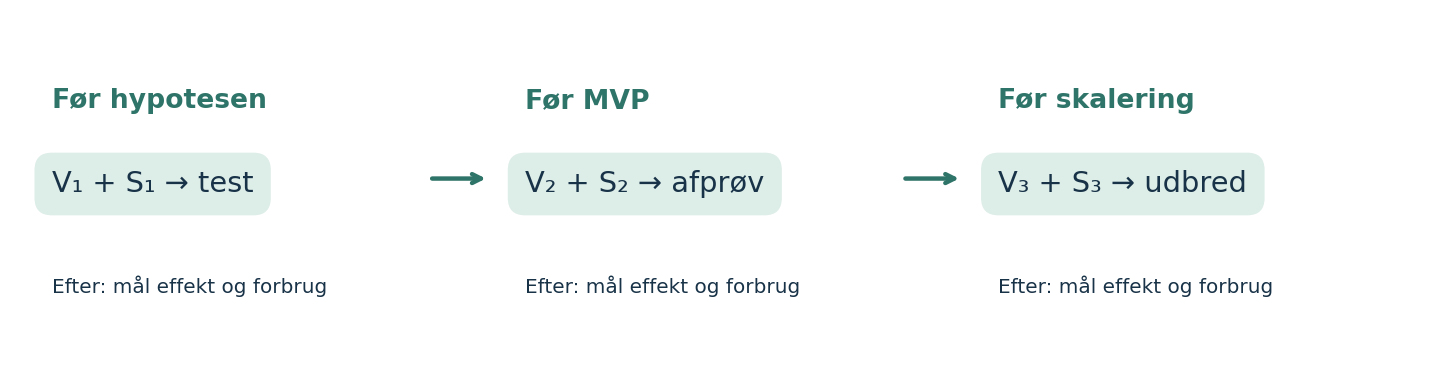
Retain approved targets and estimates as history. Compare actual results and resource use using the same scope and units. Show both the original variance and approved scope changes. Separately assess whether the estimate was accurate and whether the benefit is sufficient to continue. Evidence reduces uncertainty; a phase label does not do so automatically.
Get started: open the spreadsheet and complete Project Cards, Resources, Risks, and Value. Management approves calibration and the next phase. Learn the method in two half-days: four hours on VP and four hours on SE, prioritization, and follow-up.
Foundations: GAO, MCDA and Green Book 2026. Customer case: Morgan Stanley illustrates knowledge and evaluation; calibration and example calculations are local proposals.
Download this article as a PDF. Read the short introduction to the models.